
Sancerre — Crystal Ball

The Deeply Satisfying Sancerres of Thomas-Labaille

Most Sancerre is built for patios.
This isn’t.

This is the kind of Sancerre that leans closer to white Burgundy — richer, broader, and actually worth paying attention to. Old vines in Monts Damnés, one of the steepest and most serious sites in the appellation, farmed the hard way because there’s no other option. The result: texture, depth, and a wine that evolves in the glass instead of disappearing.

The lineup:
2023 Thomas-Labaille “Les Monts Damnés”
2024 Thomas-Labaille “Les Monts Damnés”
2024 “Cuvée Buster”
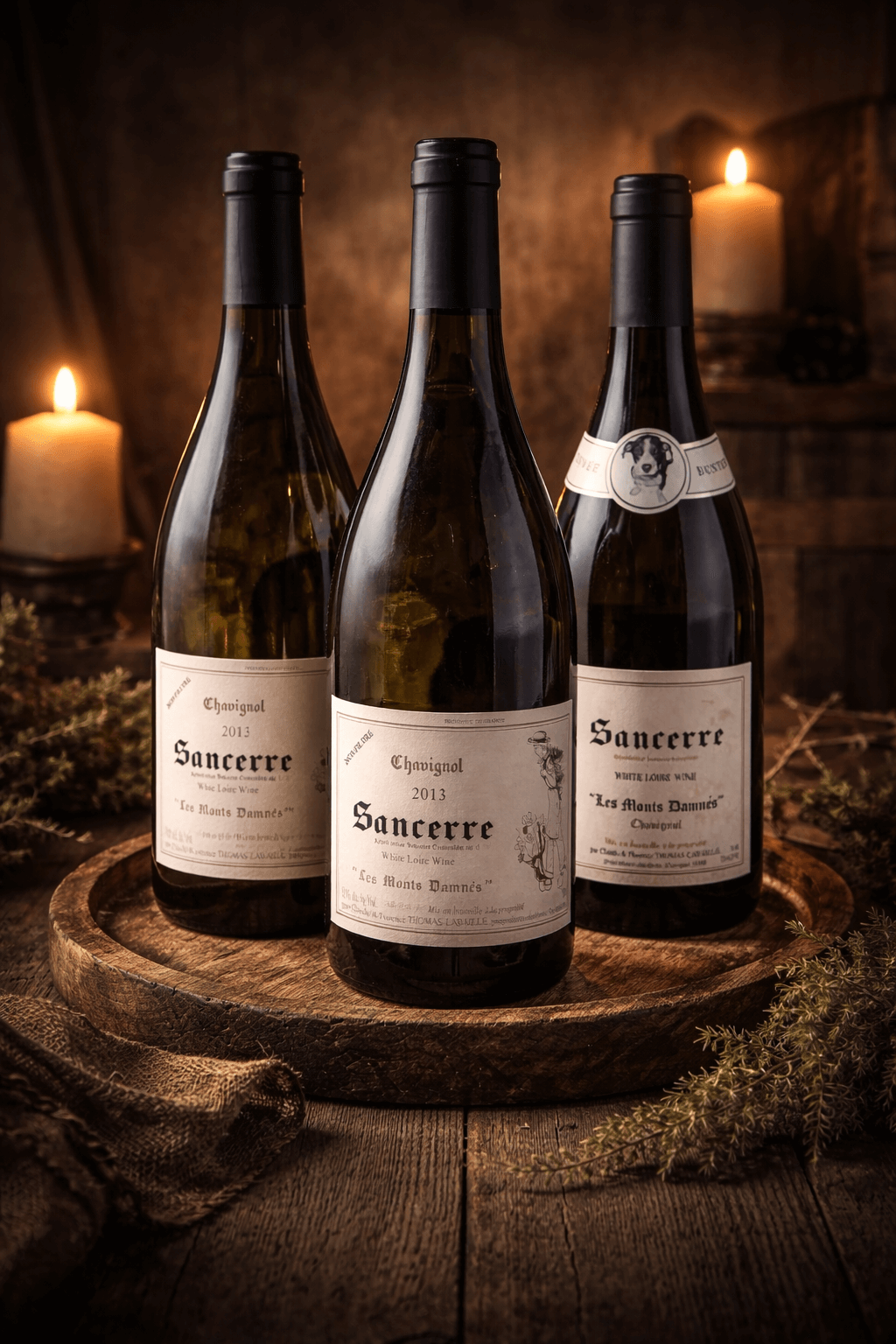
Thomas Labaille 3-Pack

The artifact, revealed.

From the archives (Louis/Dressner):

“Cotat… and my friend Claude.”

That thread now runs through the Labaille family.

  • Old vines from the brutal slopes of Monts Damnés
  • Leesy texture with real weight
  • Finishes long, salty, and quietly powerful
Claim the 3-Pack for $139

Reg $160 • Includes tasting notes • Very limited

Secure checkout via Stereophonic Wine

Only a small number of these bottles have surfaced.
The Essence of an Ancient Taste

Wine Explorers Club - The Inimitable St. Joseph from Gonon - 3pk Wine Explorers Club - The Inimitable St. Joseph from Gonon - 3pk
Sale
Quick View
Wine Explorers Club - The Inimitable St. Joseph from Gonon - 3pk
Sale Price: $360.00 Original Price: $450.00

Includes 3 bottles of 2022 Saint Joseph Rouge. Very limited.

Pierre Gonon farmed some of the best slopes of Mauves, in the very heart—and the historical birthplace—of the Saint-Joseph appellation. In 1988, he turned direction of the property over to his sons, Jean and Pierre. This friendly, talented team of brothers has since earned a reputation as the domaine of Saint-Joseph.

This section of the western bank of the Rhône boasts a long history of viticulture and winemaking. Grown on stone terraces dating back to Roman times, le vin de Mauves—a term coined by Jesuits in the 17th century— featured prominently on prestigious tables throughout France and beyond, even enjoying a mention in Victor Hugo's Les Misérables. When Saint-Joseph gained AOC status in 1956, the area under vine was very small, centered around the villages of Mauves, Tournon, and Saint-Jean-de-Muzols. The steep, east- and southeast-facing slopes here create what is nearly a mirror image to the fabled hill of Hermitage directly across the Rhône. In fact, the two appellations sit on the same granite bedrock formation, bisected by the river's flowing waters to create the topography we see today.

In 1971, the Saint-Joseph appellation was significantly expanded, bridging the gap between Cornas to the south and Côte-Rôtie in the north. The vast increase in acreage included lesser sites on flatter land, and many over-cropped, forgettable wines soon followed. The Gonon brothers break this paradigm completely, as they both farm and vinify in the old-school style. They work their ten hectares of land entirely by hand, the steep grade and narrow spacing making mechanization impossible in most parcels. Their vines are trained in the traditional échalas method, with a single stake per vine, and they do not trim the shoots. While the Gonons have been farming organically since 2004—without any chemical fertilizers, herbicides, or pesticides, and using all-natural composts—they obtained certification in 2013. Their low-yielding vineyards span the three original communes of Saint-Joseph, sitting on poor, well-draining granite and gneiss soils, including old-vine parcels purchased from the famous Raymond Trollat, now retired, in 2006. Vineyards are replanted with sélection massale cuttings from their strongest vines to perpetuate healthy rootstock and ensure genetic diversity. Once in the cellar, they ferment the wines traditionally in open, oak vats, with regular punch-downs by foot. The reds see a high proportion of stem inclusion, traditional in the region, and show classic aromatics of black olive, violets, and game with a great capacity for ageing. The Gonon brothers' wines are gutsy and wild, while still showing the freshness and delicacy typical of the appellation.